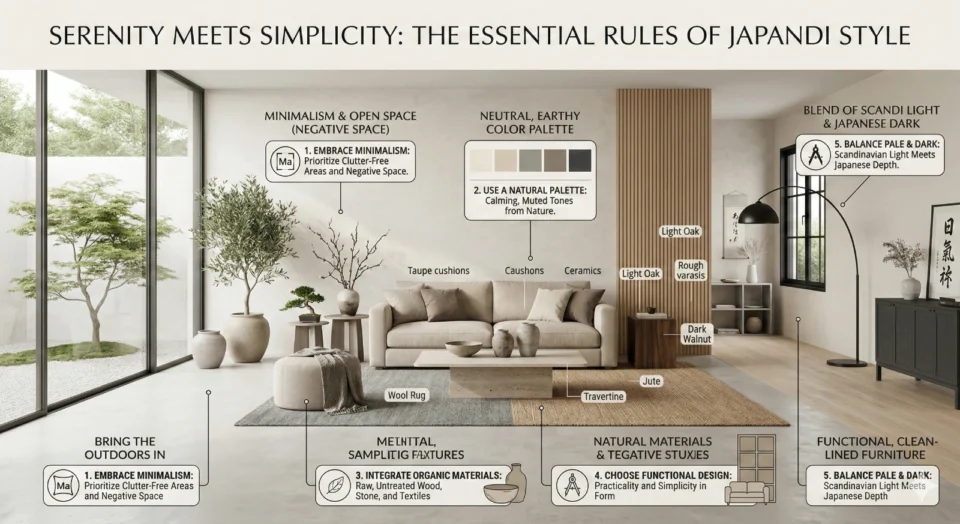
There’s a new kind of calm sweeping through interiors — and no, it’s not just minimalism 2.0. Enter Japandi, the effortlessly serene design style born from the fusion of Japanese elegance and Scandinavian simplicity. The name might be a clever blend of two regions, but its popularity in homes, hotels, and studios worldwide is anything but a gimmick.
Both Japanese and Nordic design traditions share core values: functionality, craftsmanship, restraint, and a deep respect for natural materials. Together, they create spaces that are not only beautiful but deeply liveable.
So how do you capture this hybrid aesthetic without losing the soul of either? Let’s break down the key rules of Japandi style — the ones that define the look and the feeling.
Warm Minimalism Is the Mood
Japandi isn’t about empty rooms — it’s about intentional ones. It celebrates the idea that less is more, but never in a cold or stark way. This is warm minimalism: thoughtful objects, layered textures, and perfectly imperfect details.
A Japandi room might contain only a few furniture pieces, but they’ll be sculptural, useful, and built to last.
Try this: Start by decluttering your space. Keep only what adds value — visually or emotionally. Then, add back one or two textural elements (like a linen throw or a handmade ceramic) to create depth and warmth.
A Balanced Colour Palette
Where Scandinavian design leans toward bright whites and pale greys, Japandi introduces richer, more grounded tones. Think charcoal, taupe, muted terracotta, and earthy greens. The result is a more balanced palette that still feels light but offers more contrast and dimension.
Walls are often matte and natural-looking. Accents — whether a black wood console or a deep indigo cushion — provide a sense of quiet drama.
Focus on Craftsmanship and Natural Materials
This is where Japandi shines. From hand-carved oak stools to raku-fired pottery, every piece in a Japandi space should celebrate craft and material honesty.
Natural materials like wood, stone, paper, linen, and wool dominate — often in raw, unpolished finishes. Lacquered or glossy surfaces are rare. Imperfection is embraced, especially when it tells a story.
Pro tip: Seek out artisan-made pieces or heirlooms. Japandi is not about fast furniture — it’s about longevity, beauty, and respect for the handmade.
Function Over Flash
Form follows function in Japandi interiors — always. Every item should serve a purpose. Furniture is often low-slung, clean-lined, and multipurpose, reflecting both Japanese tatami culture and Nordic practicality.
No frills, no filler. Every curve, join, and silhouette has intention behind it.
Example: A low platform bed in walnut with built-in storage, paired with linen bedding and a shoji-style lamp. It’s minimalist, yes — but supremely practical and peaceful.
Embrace Wabi-Sabi Meets Hygge
Wabi-sabi (the Japanese philosophy of beauty in imperfection and impermanence) and hygge (the Danish pursuit of cozy comfort) might sound like opposites, but Japandi proves they can coexist. Together, they create interiors that are both soulful and serene.
That means you’re allowed — encouraged, even — to leave the small crack in the ceramic vase, or to keep the slightly weathered wooden bench. These signs of life add texture and meaning.
Thoughtful Layouts & Negative Space
A hallmark of Japandi is the use of negative space — not as emptiness, but as breathing room. Rooms are arranged with flow in mind. There’s no overcrowding, and every object has room to shine.
The effect? A space that feels calming rather than chaotic — ideal for the overstimulated modern world.
Biophilic Touches
Plants — but make them intentional. In Japandi design, greenery is not just décor, it’s connection. A single bonsai or a potted olive tree can introduce movement and contrast. Avoid overly styled florals in favour of natural, sculptural branches or low-maintenance foliage like rubber plants or eucalyptus.
Why Japandi Matters Now
In a time of visual overload and disposable trends, Japandi offers a kind of gentle resistance. It’s not about chasing aesthetics, but about creating spaces that feel good — to live in, to look at, and to return to. It reminds us that good design is thoughtful, sustainable, and sensory.
Whether you’re renovating your home or simply styling a shelf, embracing Japandi principles can help you slow down, simplify, and reconnect with space and self.