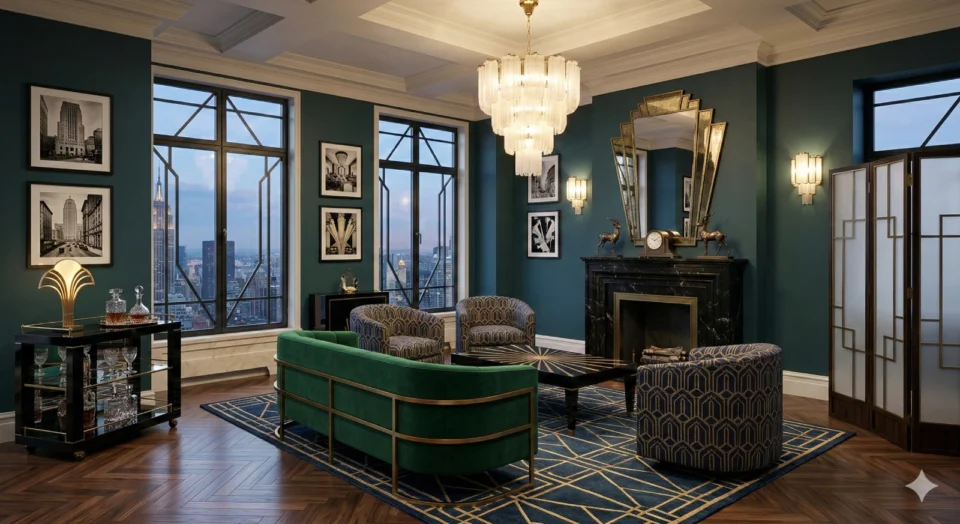
If there’s one design style that has mastered the art of drama, glamour, and unapologetic flair, it’s Art Deco. Born in the roaring 1920s, a decade of jazz, liberation, and modernism, Art Deco interiors have a way of making everything feel just a little more decadent. And a century later, the aesthetic still seduces designers and homeowners alike.
But what exactly makes a space Art Deco? And why is it having such a strong resurgence in interiors today?
Let’s explore the defining characteristics of Art Deco design and how to channel its signature luxe into the modern home.
Bold Geometry That Speaks Volumes
One glance at an Art Deco interior, and you’ll see it: the angles, the symmetry, the repetition. Think chevrons, zigzags, stepped forms, and sunbursts. These weren’t just decorative flourishes, they symbolized a shift toward modernism, embracing the machine age with structure and style.
Case in point: The iconic Chrysler Building in New York, with its gleaming, geometric crown, remains one of the world’s most recognizable Art Deco landmarks and that visual language translates effortlessly into interior design. From tiled floors in striking black-and-white patterns to geometric mirrors and embossed cabinet fronts, Deco geometry feels crisp, commanding, and completely current.
Modern tip: To nod to this element without overwhelming a space, opt for one standout piece, a scalloped console, a patterned wallpaper, or a lacquered sideboard with stepped detailing.
Luxurious Materials That Whisper (and Shout) Glamour
Art Deco was, at its heart, about opulence. The movement emerged between two World Wars, and with it came a celebration of craftsmanship and luxury. Interiors were layered with rich woods like macassar ebony, inlaid marquetry, marble, glass, and exotic skins. Mirrored finishes and high-gloss lacquers added shine. Chrome and brass brought the glint.
Today’s interpretation? We’re seeing this richness return in velvety upholstery, burl wood dining tables, and polished stone finishes. These materials bring depth and tactility—perfect for the modern appetite for texture.
Pro tip for interiors: Mix two or three materials (think: lacquer, brass, and velvet) in a vignette for a space that feels sensual but curated.
A Sophisticated Colour Palette With a High-Contrast Edge
Forget all-white minimalism. Art Deco interiors thrived on drama—and the colour palette reflected that. Think jewel tones like emerald green, sapphire blue, and amethyst purple, offset with moody neutrals, glossy black, and metallic accents.
A classic Art Deco living room might feature deep blue velvet seating, a black marble fireplace, and brass-trimmed sconces. Even when the palette veered neutral, it was rarely soft, ivory and charcoal were chosen for contrast, not calm.
Designers today are embracing this confidence in colour: burnt orange against oxblood red, navy with mustard, or black with everything. Pair those hues with reflective surfaces for even more impact.
Sleek Curves and Sculptural Forms
Despite all the geometry, Art Deco was never stiff. There’s always been a softness to balance the structure: barrel-back chairs, rounded cocktail tables, and sweeping silhouettes that nod to the aerodynamic styling of the period.
It’s why the style plays so well with the current obsession with sculptural furniture and rounded forms. A plush curved sofa or an arched velvet headboard offers an Art Deco wink without going full period drama.
Example: In Parisian interiors by designers like Dimore Studio or India Mahdavi, you’ll often see Deco-inspired silhouettes reimagined in punchy palettes, proof that the look is timeless, not nostalgic.
Statement Lighting as the Star
No Art Deco space is complete without a lighting moment. In the 1920s, lighting became more than functional—it became architectural. Tiered chandeliers, etched-glass pendants, and shell-shaped sconces created ambiance and artistry.
Look for pieces with etched glass, globe shades, or stepped metalwork. The bigger the statement, the better. Think of lighting as the jewellery of your space, it’s where you can push the Deco drama without overwhelming the room.
The Art of Display
Art Deco homes didn’t shy away from styling. Crystal decanters, sculptural objects, lacquered boxes, and fine ceramics were proudly displayed. It was all about living beautifully and showing it.
In today’s homes, this translates into intentional vignettes: a collection of vintage books and a sculptural bust on a console, or a drinks tray with cut-glass tumblers and a brass shaker. Even minimalist spaces can borrow this approach, adding just a touch of curated indulgence.
Why Art Deco Still Matters
Art Deco’s longevity isn’t just about nostalgia. It’s about balance: the blend of ornament and function, the confidence of bold design, and the belief that beauty belongs in everyday life. In a design world that sometimes swings too far toward the muted and minimal, Deco reminds us of the joy in grandeur.
At Maison Source, we’re seeing a resurgence of makers who are reviving Deco craftsmanship in new, modern ways, from hand-poured terrazzo tables to sculptural lighting with gold leaf finishes. For interior designers looking to add depth, character, and richness to projects, Art Deco is more relevant than ever.
So whether you’re designing a boutique hotel lobby, sourcing for a residential penthouse, or refreshing a corner of your own home, consider adding a little Deco dazzle. Your future self will thank you.