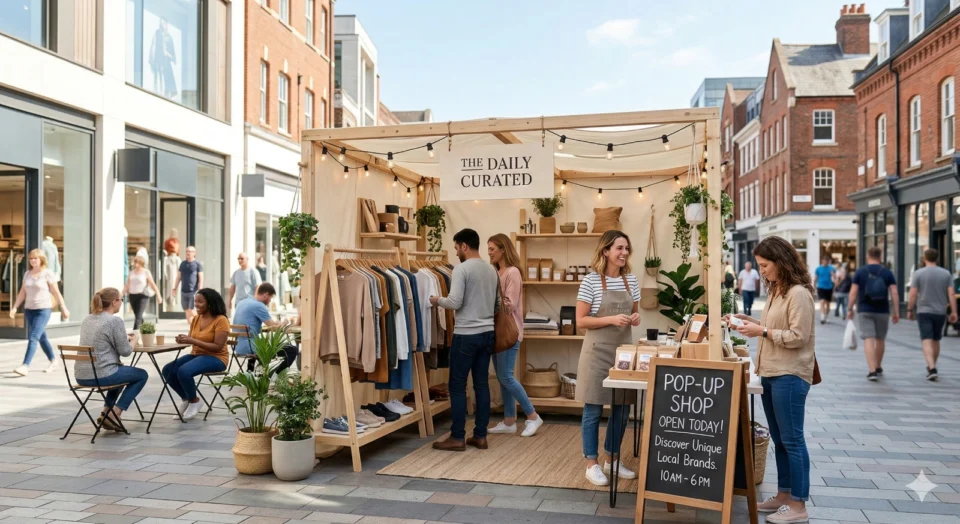
If your business is entirely online, setting up a temporary physical space might feel daunting. It’s a fair concern – after all, you chose e-commerce to avoid the complications of running a store. So why reconsider now?
With changing customer habits and the rising costs of digital marketing, getting in front of your customers IRL, without the commitment of a long-term lease, is worth considering. It’s an opportunity to discover new customers, increase revenue, gather real-time feedback and grow your community. And with more mixed-use retail spaces emerging, now is a good time to set up shop.
Hopefully we’ve sold you on the idea so let’s get into the details.
Why is a pop-up shop important?
We’ve briefly touched on this, but pop-ups are powerful way to connect with both existing and potential customers, especially if you operate solely online. For artisans and makers, it’s a chance to let people experience your products firsthand—something that’s hard to replicate digitally.
The benefits don’t end there. A successful pop-up can provide a valuable revenue boost and give you the chance to cultivate a community. We also can’t forget about the added revenue stream. If successful, a pop up can be an added financial boost. Yes, it’s possible to do this online, there’s something special about connecting face-to-face. Hosting small events or workshops can leave a lasting impression and turn customers into loyal supporters.
How to have a successful pop-up shop
Now for the practical part—how do you create a pop-up that not only delights your current audience but also brings in new customers? Here are five key tips:
Choose the right time and location
Strategic positioning matters. Pick a space that aligns with your target audience and offers strong footfall. High visibility boosts your chances of being seen and hopefully, making a sale. Don’t overlook this. Timing also plays a role; if your products are seasonal, plan accordingly.If your products are season sensitive, factor this into your planning process.
Start publicity early
Don’t wait until every last detail is finalised. Start building awareness at least a month ahead—longer if you can. Use your existing marketing channels and, if budget allows, invest in paid ads to expand your reach. Document the setup process as content to generate buzz and anticipation.
Showcase your best stuff
Think of your pop-up as a showroom for your best work. Instead of displaying everything, curate a tight edit of products that tell your brand story. Make sure your bestsellers and hero pieces take centre stage, and plan logistics to ensure everything arrives on time.
Assemble a winning (and willing) team
You may be used to doing it all, but pop-ups require support. Whether it’s just for a weekend or a few weeks, enlist a team—friends, family, or freelancers—who can help with setup, sales, and customer service.Divvy up roles and responsibilities to ensure all areas are covered.
Don’t just sell – create experiences
Yes, sales are important – but the magic of a pop-up lies in creating memorable experiences. think about ways to engage visitors beyond the checkout: offer live demos, meet-the-maker moments, or hands-on activities that reflect your brand and craft.
Final thoughts…
Your pop-up doesn’t have to be a blockbuster production. It can be as simple or as elaborate as you like. What matters most is presenting your brand with care, showcasing your strongest products, and connecting meaningfully with your audience.
We can’t wait to see what you bring to life.