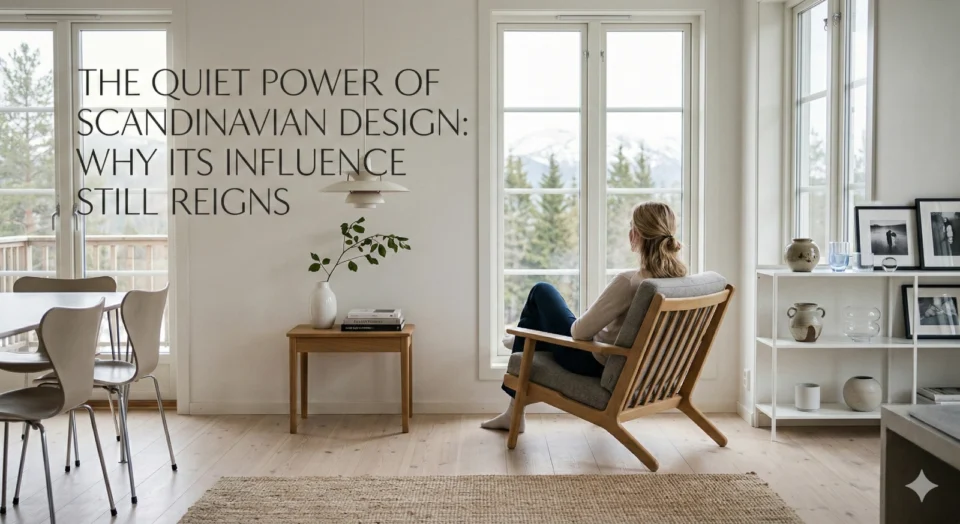
Scandinavian design. Just saying the phrase conjures up visions of light-filled rooms, sculptural chairs, and pale oak floors bathed in natural sunlight. But beyond the calm Instagram aesthetic lies a design movement with real depth — one that has quietly influenced global interiors for over 70 years and shows no signs of slowing down.
At its core, Scandinavian design is about more than minimalism or “hygge” (though both are undeniably linked). It’s a philosophy: form follows function, good design belongs to everyone, and simplicity is never boring.
So what makes a space truly Scandi? Let’s break down the defining features of this enduring style — and explore why it continues to shape how we live, furnish, and feel in our homes today.
Function-First Design, Always
Forget unnecessary ornamentation. In Scandinavian design, everything in a room has a reason for being. This doesn’t mean a space is cold or clinical — quite the opposite. A well-designed lamp or ergonomic lounge chair offers both beauty and purpose. You’ll often find pieces that feel intuitively designed: smooth edges, clever storage, and honest materials that enhance everyday life.
Example: The classic Wishbone Chair by Hans J. Wegner. It’s elegant, tactile, and stackable — embodying everything Scandi design stands for.
A Light, Airy Colour Palette
Rooted in the long, dark Nordic winters, Scandinavian interiors are designed to amplify natural light. Walls are often painted soft whites or gentle greys, with accents of pale wood, muted blues, and occasional black for contrast. It’s a palette that calms rather than demands attention.
You won’t find overly saturated hues here — instead, think chalky neutrals, warm taupes, and touches of nature-inspired greens and terracottas.
Natural Materials Take Centre Stage
Scandinavian design is grounded — literally. You’ll find an abundance of natural materials like light woods (ash, birch, pine), wool, linen, leather, and stone. These materials don’t just look good; they age gracefully, adding warmth and tactility to even the most pared-back spaces.
Pro tip: Layering different textures — like linen curtains, a sheepskin throw, and a raw timber coffee table — is key to achieving that effortless Scandi softness.
Minimal, Not Stark
While Scandinavian spaces are often described as minimalist, they’re never sterile. The trick lies in warm minimalism: a careful curation of objects, clean lines, and personal touches. A single ceramic vase, a stack of thoughtfully chosen books, or an inherited textile can bring just the right amount of soul to a space.
This less-is-more approach invites clarity and ease — it’s about creating a sanctuary, not a showroom.
Emphasis on Craftsmanship
One of the most revered aspects of Scandinavian design is its respect for craftsmanship. Whether it’s a hand-thrown ceramic bowl or a sofa built to last generations, quality is never sacrificed for trend. Many of the most beloved Scandi pieces — like Alvar Aalto’s bentwood stools or Arne Jacobsen’s Egg Chair — are celebrated as much for their artistry as their utility.
In today’s climate of conscious consumption, this dedication to longevity feels more relevant than ever.
Connection to Nature
Nature isn’t just an inspiration — it’s integrated into Scandinavian interiors. Houseplants, panoramic windows, raw stone, and nature-inspired forms all play a role in bringing the outdoors in. Even urban homes strive to maintain a sense of biophilic design, whether it’s through organic shapes or earthy tones.
Comfortable, Livable Interiors
Most of all, Scandinavian design is about living well. It’s design that supports your daily rituals — from morning coffee in a sunlit nook to dinner parties around a perfectly imperfect wooden table. It’s democratic, timeless, and above all, human.
Why It Still Matters in 2025
As the world gets louder, Scandinavian design offers a kind of visual quiet. It’s not about maximalism or fleeting trends — it’s about clarity, comfort, and connection. Whether you’re designing a new build or refreshing a corner of your flat, incorporating even a few Scandi elements can ground your space in intention and style.